Good bathroom lighting should make the room easier to use without turning the mirror into a source of glare. The right vanity fixture balances practical visibility, comfortable colour and a scale that suits the wall. This guide explains the decisions worth making before you order.
Start with the mirror and vanity measurements
Measure the mirror width, the usable wall space above it and the distance to nearby cabinets, doors and ceiling details. Many designers begin with a fixture around three-quarters of the mirror width, then adjust for the proportions of the room. Treat that as a starting point rather than a fixed rule: a wide double vanity may need two fixtures, while a compact powder room can look better with a narrower light.
Check the fixture projection as well as its width. Adjustable heads need enough room to rotate without touching the wall, mirror frame or cabinet. Confirm the mounting plate dimensions and junction-box position before buying.
Choose a useful colour temperature
Warm light around 2700–3000K creates a relaxed, residential feel. Neutral light around 3500–4000K can make grooming tasks clearer while still feeling comfortable. Higher colour temperatures may look crisp, but they can feel clinical in a small bathroom. If a fixture offers selectable colour temperatures, choose the setting that works with the room’s daylight, tile and wall finishes.
Colour rendering matters too. A higher-CRI source generally shows skin tones and finishes more naturally, but always verify the published specification for the exact model you are considering.
Reduce shadows and glare
Evenly spaced light sources usually create a more balanced result than one concentrated point of light. Frosted diffusers can soften hotspots, while adjustable heads let you aim illumination towards the mirror or surrounding surfaces. Avoid pointing an exposed bright source directly at eye level.
Room finishes affect the result. Glossy tile and large mirrors reflect more light, so a dimmable fixture can be particularly usBathroom vanity lighting has two jobs: it must help you see clearly for shaving, skincare and makeup, and it should make the room feel comfortable at every hour. The best result usually comes from a fixture that suits the mirror width, places light near face level, renders color accurately and works with a compatible dimmer.
This practical guide explains how to choose vanity-light size, mounting height, color temperature, CRI, brightness and bathroom-safe installation. The measurements below are starting points, not rigid rules: always check the fixture drawing, your junction-box position and local electrical requirements before ordering.

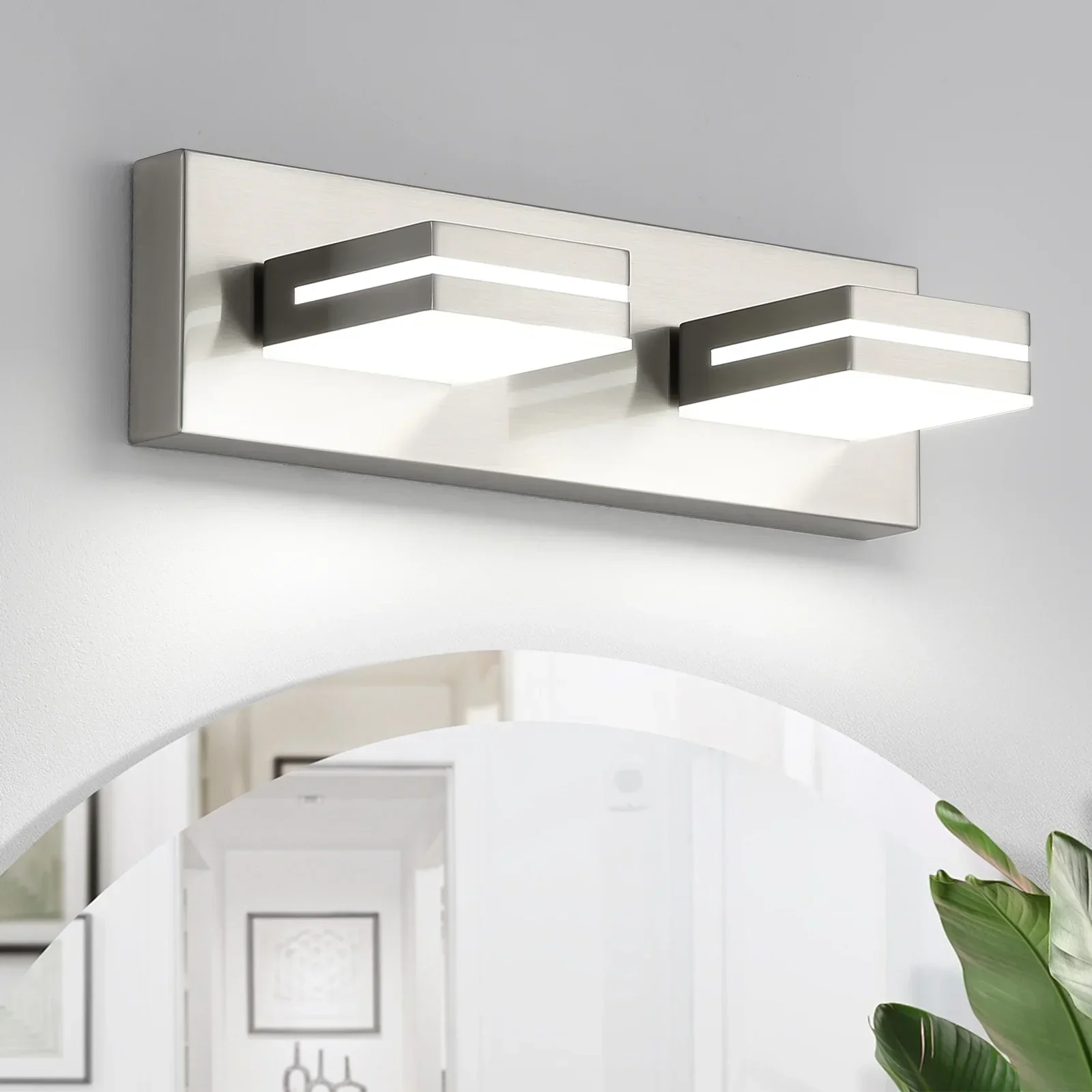
A multi-head LED vanity light can spread illumination across the mirror while keeping the profile visually light. Product image: Okeli Lights.
Quick answer: what makes a good bathroom vanity light?
Scale: choose a fixture that looks balanced with the mirror and leaves clearance from cabinets, trim and the ceiling.
Placement: light the face evenly. Side sconces are excellent for reducing shadows; a well-diffused bar above the mirror is often easier in compact rooms.
Color quality: 2700–3000K feels warm and flattering, while 3000–3500K gives a cleaner neutral appearance for grooming. Look for CRI 90 or higher when accurate skin tones matter.
Control: use a dimmable LED fixture with a dimmer approved for its driver type.
Safety: confirm the product's damp-location suitability, voltage and installation instructions. Use a qualified electrician when wiring or location is uncertain.
Bathroom vanity light size chart
There is no single perfect fixture width for every mirror. Frame thickness, sink position, ceiling height and the light's beam pattern all affect the result. Use this table as a visual starting point, then compare the exact product dimensions with painter's tape on the wall.
Mirror or vanity setup | Useful starting format | What to check |
|---|---|---|
18–24 in compact mirror | Single sconce, 2-light bar or narrow integrated LED | Door swing, medicine cabinet and side clearance |
24–36 in single vanity | 2–3-light bar or two slim side sconces | Keep the fixture visually centered over the sink or mirror |
36–48 in single vanity | 3–4-light bar or paired sconces | Check that light reaches both sides of the face |
48–60 in wide vanity | 4–5-light bar, two fixtures or side sconces plus ambient light | Avoid one small, bright source in the center |
Double vanity | One fixture per sink or a coordinated layered plan | Align lighting with each user rather than only with the cabinet |
A common design approach is to choose an above-mirror fixture narrower than the mirror. However, treat any percentage rule as a guide rather than a guarantee. A compact fixture with a wide, even beam may outperform a longer bar with harsh hotspots.
Above the mirror or beside it?
Above-mirror lighting
An overhead vanity bar is space-efficient, works with many existing junction boxes and keeps narrow walls uncluttered. Choose a frosted or well-shielded diffuser so the LEDs do not shine directly into your eyes. Adjustable heads can help aim light toward the face and countertop instead of creating glare on the mirror.
Side sconces
Sconces placed on both sides of the mirror can illuminate the face more evenly because the light arrives from left and right. They are especially useful for detailed grooming. The trade-off is the extra wall width and wiring required. If the layout allows, place the centers near face level and keep the pair symmetrical.
Layered bathroom lighting
The vanity fixture should not carry the entire room. Ceiling light supplies general illumination, vanity lighting handles facial tasks, and a shower-rated or accent fixture can serve specific zones. Layers reduce the need to over-brighten a single fixture.
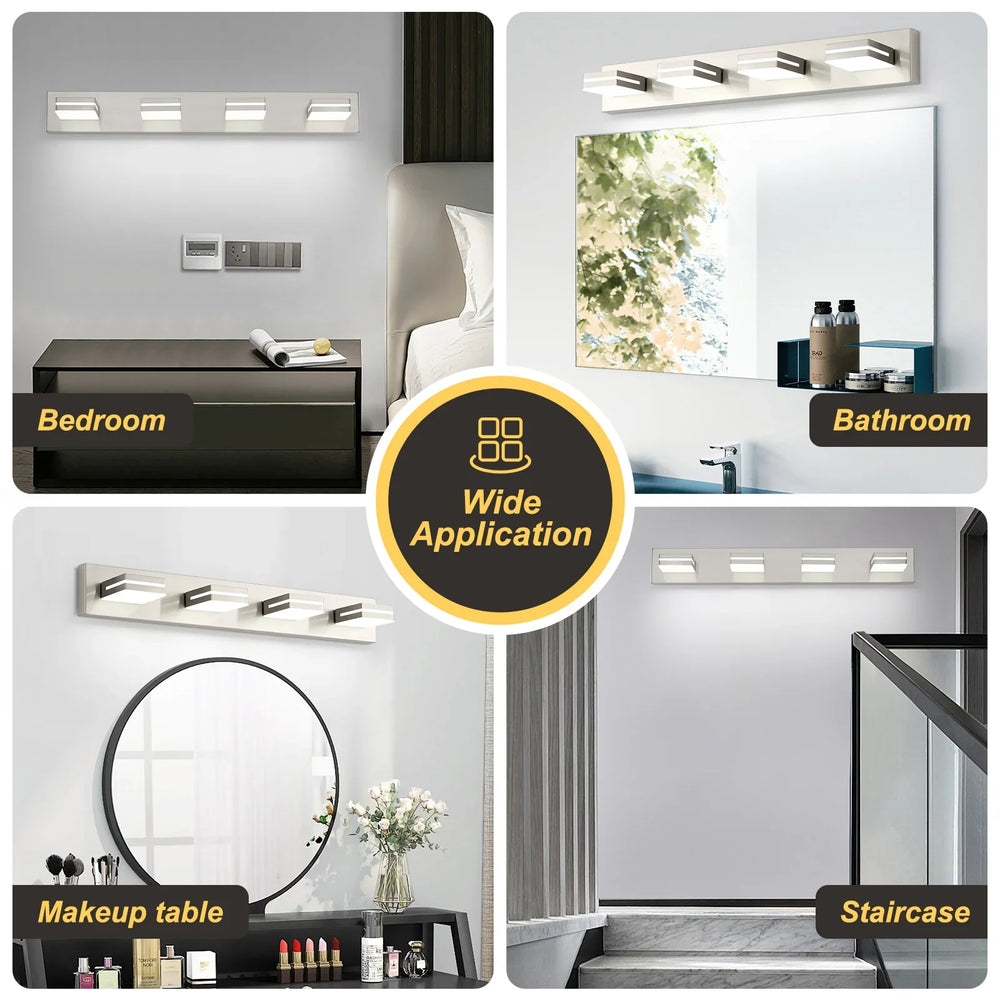
Compare a fixture in context, not only against a white product background. The mirror, wall color and nearby finishes change how bright it feels. Product image: Okeli Lights.
Mounting height and placement
For an above-mirror fixture, many rooms land in the general area of 75–80 inches from the floor to the fixture center, but the mirror height and ceiling matter more than a universal number. Leave enough space above the frame so the light does not look cramped, and confirm that the mounting plate covers the junction box.
For paired sconces, a center height around 60–66 inches from the floor is a common starting range. Adjust for the users' eye level, the sconce shade and the mirror. The goal is soft light across the face, not a bright source directly in the line of sight.
Before drilling, tape the fixture outline to the wall and view it from the doorway. Open cabinet doors and the medicine cabinet to catch clearance problems early.
Color temperature: 2700K, 3000K, 3500K or 4000K?
Color temperature | Visual effect | Best fit |
|---|---|---|
2700K | Warm, relaxed and slightly golden | Traditional bathrooms, evening ambience and warm finishes |
3000K | Warm-neutral and flattering | A versatile choice for most residential bathrooms |
3500K | Balanced, clean and neutral | Task-focused bathrooms and mixed modern finishes |
4000K | Crisp and cool-neutral | Users who prefer a bright, clinical look; test with skin tones first |
Match the vanity light to nearby ceiling fixtures so the room does not look split between orange and blue light. Daylight also matters: a north-facing bathroom may benefit from warmth, while a bright room with cool stone can tolerate a more neutral setting.
Why CRI matters for mirrors and makeup
Color Rendering Index describes how naturally a light source reveals colors compared with a reference source. For a vanity, CRI 90+ is a useful target because it helps skin tones, cosmetics and clothing appear more believable. CRI alone does not describe glare, beam spread or flicker, so review it alongside the diffuser and driver specifications.
How many lumens do you need?
Lumens measure total visible light, but the number on the box does not tell the whole story. A pale bathroom with a large mirror reflects more light than a room with dark tile. A wide diffuser can feel more comfortable than concentrated high-output LEDs even at a similar lumen rating.
Choose enough output for grooming, then add a dimmer so early-morning and late-night use is comfortable. If the fixture is the room's only light source, consider adding separate ambient lighting rather than simply choosing the brightest vanity bar available.
Dimming, LED drivers and flicker
“Dimmable” does not mean compatible with every wall control. Integrated LED fixtures may use TRIAC/forward-phase, ELV/reverse-phase or another driver type. Check the manufacturer's dimmer list or driver specification before purchase. An incompatible dimmer can cause flicker, buzzing, delayed start-up or a limited dimming range.
Confirm the fixture and dimmer use the same control method.
Check the required minimum and maximum load.
Do not reuse an old incandescent dimmer unless it is approved for the LED driver.
Test the full dimming range before the electrician closes the installation.
Bathroom safety: damp ratings, wet zones and wiring
A bathroom is a moisture-prone environment. Verify whether the fixture is listed for damp locations and whether its planned position falls inside a wet zone that requires a higher rating. Product certification, damp-location suitability and local electrical code are separate questions; one does not automatically prove the others.
Follow the manufacturer's instructions and local code for clearances, grounding and junction boxes. If you are unsure about wiring, the existing box or proximity to a shower or tub, use a licensed electrician.
Real product example: Okeli modern LED vanity light
Okeli's modern LED vanity-light range is a useful example of what to compare on a product page. The current listing offers 2-, 3-, 4- and 5-light formats in brushed nickel, black and gold. It describes dimmable integrated LEDs, rotatable heads, rust-resistant construction and ETL certification. Published output varies by size, from 1,300 lumens for the 2-light version to 3,600 lumens for the 5-light version.
The adjustable heads are helpful when you need to direct light toward the mirror, but measure their movement envelope before ordering. Also verify the selected variant's wattage, dimensions, color temperature and compatible dimmer because options can differ.
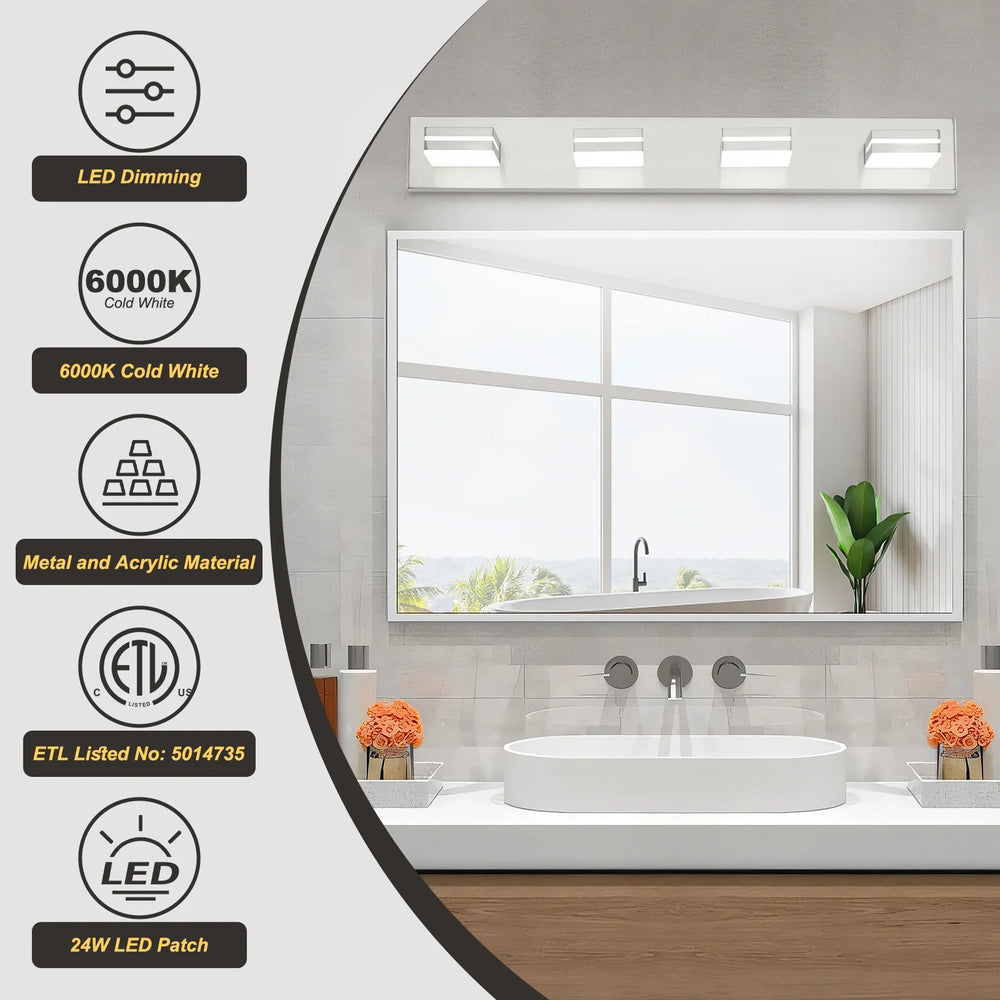
This four-light configuration illustrates how multiple heads spread light across a wider mirror. Always verify the exact variant specifications before ordering. Product image: Okeli Lights.
View the current Okeli vanity-light options and specifications. Prices, availability and specifications can change, so confirm the selected model at checkout.
Pre-purchase checklist
Measure the mirror, vanity and clear wall space.
Mark the fixture outline and mounting height with painter's tape.
Confirm the junction-box location and mounting-plate size.
Check fixture depth, cabinet doors and adjustable-head movement.
Choose a color temperature that matches the room's other lights.
Prefer CRI 90+ when accurate skin tones are important.
Verify lumens, wattage, voltage and compatible dimmer type.
Confirm damp or wet-location suitability for the exact position.
Review installation instructions, warranty and return terms.
Common vanity-lighting mistakes to avoid
Buying by width alone: beam spread, diffuser design and mirror placement matter as much as fixture length.
Mixing color temperatures: a warm vanity light beside a cool ceiling light can make the room feel inconsistent.
Ignoring CRI: brightness alone does not guarantee natural-looking skin tones.
Using one harsh source: concentrated light above the head creates eye-socket and chin shadows.
Assuming all dimmers work: LED driver compatibility must be checked.
Forgetting moisture and code: bathroom location requirements come before appearance.
Frequently asked questions
Should a vanity light be wider than the mirror?
Usually an above-mirror light looks most balanced when it is no wider than the mirror, but there is no universal rule. Judge the beam spread, fixture shape and surrounding wall space together.
Is 3000K or 4000K better for a bathroom?
3000K is the more versatile residential choice because it is warm-neutral and flattering. 4000K looks crisper and may suit task-focused spaces, but it can feel clinical. If possible, test both against the room finishes and skin tones.
What CRI is best for bathroom makeup lighting?
CRI 90 or higher is a sensible target. It generally reproduces skin tones and cosmetics more naturally than lower-CRI lighting.
Are vanity lights safe in a damp bathroom?
Only when the exact fixture is suitably rated for its location and installed to local code. A product may be certified yet still not be approved for every wet-zone position.
Can any LED vanity light use a dimmer?
No. The fixture must be marked dimmable, and the wall control must match the LED driver's dimming method and load range.
Bottom line
Start with the mirror and the way the bathroom is used, then choose a fixture that spreads light evenly, renders colors well and can be dimmed without flicker. Measure twice, compare the exact variant specifications and treat safety ratings as essential rather than optional.
For current verified savings, see the Okeli Lights coupon and deal page.
Affiliate disclosure: Stack The Coupons may earn a commission from qualifying purchases made through links in this guide, at no additional cost to you. Editorial guidance is based on product specifications and general lighting principles; we do not claim personal use of the product.eful in highly reflective bathrooms.
Check dimmer and electrical compatibility
“Dimmable” does not mean every LED fixture works with every wall control. Match the fixture’s driver with a compatible dimmer and confirm the voltage listed for your market. If you are replacing an older fluorescent or incandescent fitting, the existing control may also need to be changed.
Electrical work must follow local codes. If the mounting box, wiring or bathroom location rating is uncertain, use a qualified electrician rather than relying on assumptions from a product photo.
Use this pre-purchase checklist
Mirror width, fixture width and wall clearance
Mounting plate size and junction-box position
Fixture depth and adjustable-head movement
Colour temperature and colour-rendering specification
LED driver and dimmer compatibility
Voltage, moisture suitability and local electrical requirements
Return terms, warranty and current availability
Where Okeli Lights may fit
Okeli Lights lists bathroom vanity fixtures in several formats, including multi-head wall lights and dimmable LED designs. Compare the official dimensions, finish, colour-temperature options and dimmer guidance for the exact model rather than assuming every fixture has the same features.
Browse the current Okeli Lights collection and verify the final price and specifications before checkout.
Affiliate disclosure: Stack The Coupons may earn a commission from qualifying purchases made through this link, at no additional cost to you.
Image disclosure: The featured image is an original AI-generated product-category visualisation and is not an exact product photograph.