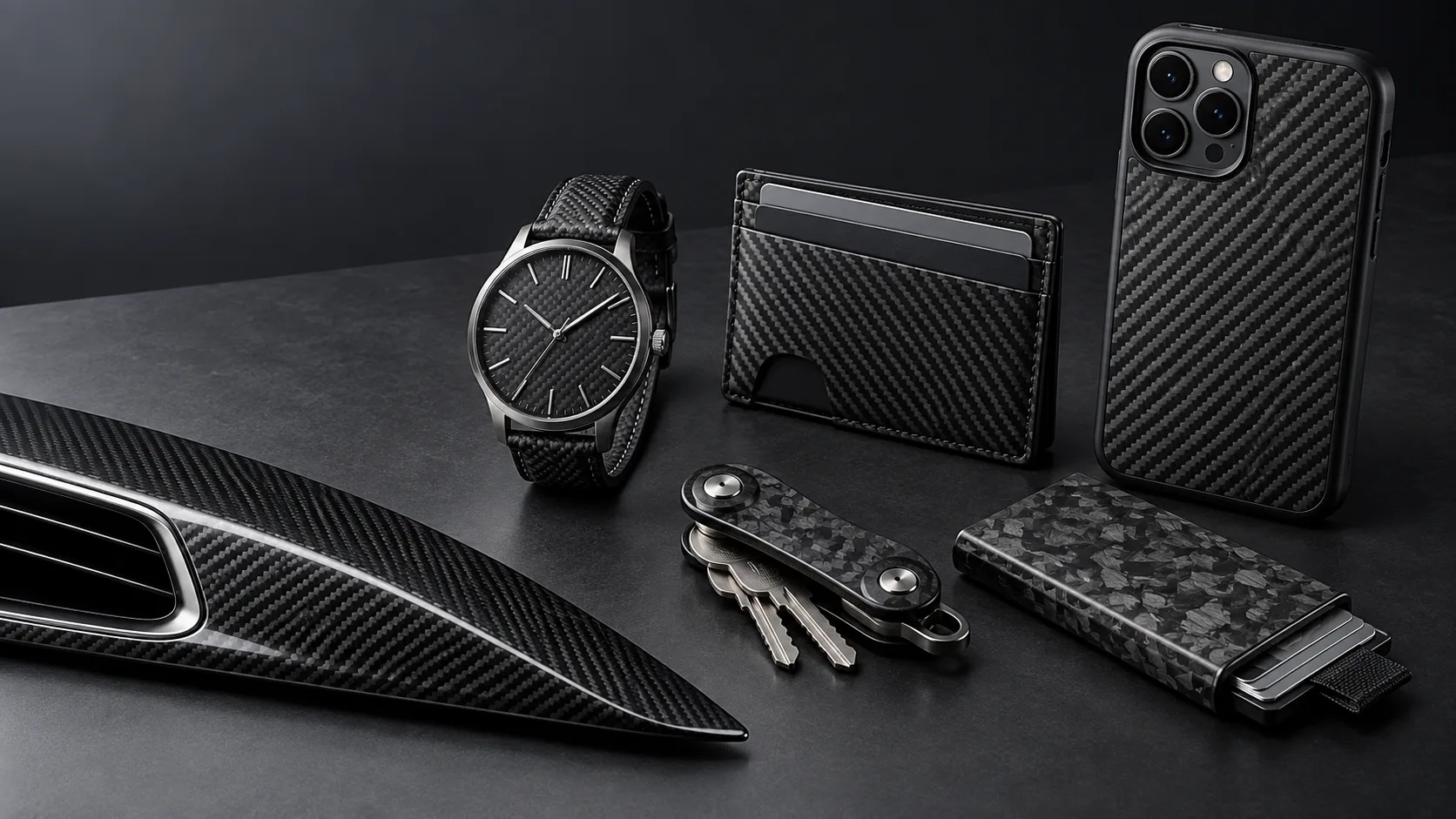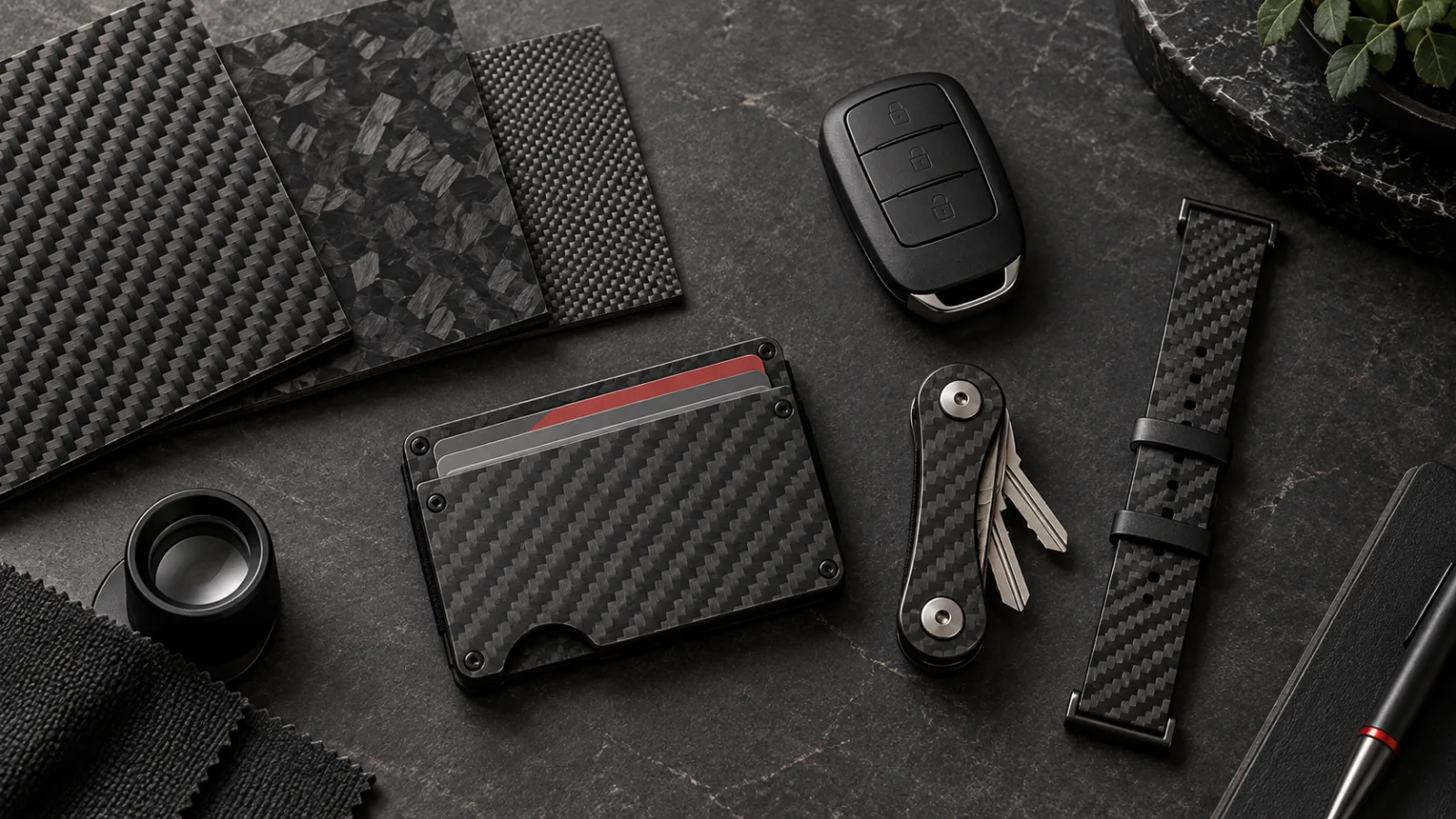
Carbon fiber is used in accessories for its distinctive pattern, low weight and high stiffness, but the words “carbon fiber” can describe very different constructions. A watch, wallet, phone case and automotive trim piece may combine carbon material with resin, leather, metal or polymer in different ways. This guide explains what to inspect before choosing a carbon-fiber accessory.
Affiliate disclosure: StackTheCoupons may earn a commission if you follow a qualifying link and make a purchase. This does not change the price you pay or the checks recommended below.
Start with the intended use
Choose by function before appearance. A slim wallet needs comfortable edges and reliable card retention. A phone case must match the exact device and protect exposed corners. A watch should fit the wrist and use a suitable movement and crystal. Automotive accessories need dimensions and mounting methods that match the vehicle.
List the non-negotiable requirements first: size, compatibility, weight, durability, water exposure, pocket comfort, storage capacity or installation method. The carbon pattern should be evaluated after those basics.
Understand common carbon-fiber descriptions
Traditional woven carbon fiber usually shows an orderly fabric pattern beneath a resin surface. Forged carbon typically has a more irregular, marbled appearance created from chopped fibers. Both can be used effectively, but appearance alone does not tell you the complete structure or quality.
Some accessories use a carbon-fiber outer layer over another material; others combine carbon panels with aluminum, stainless steel, leather or polymer. Check the product specifications for the construction of the body, frame, hardware and lining. Avoid assuming that every visible black pattern is structural carbon fiber.
Inspect finish and edge details
Product photography should show the surface from more than one angle. Look for consistent resin coverage, clean cutouts, smooth edges and well-finished transitions where carbon meets another material. On an item handled daily, raised fibers or sharp corners can become uncomfortable.
A glossy finish can emphasize the weave but may reveal fingerprints and fine scratches more easily. A matte finish can reduce glare while changing how the pattern appears. Neither is automatically better; the useful choice depends on where and how the item will be used.
Check dimensions and compatibility
For wallets and card holders
- Compare closed dimensions and thickness.
- Check the stated card capacity and retention mechanism.
- Confirm whether cash requires folding or a separate clip.
- Review how easily cards can be removed without loosening the stack.
For device cases
- Match the exact phone, tablet, earbud or watch model.
- Verify camera, port, speaker and button clearances.
- Check wireless-charging and accessory compatibility.
- Understand whether the case prioritizes slimness or impact protection.
For watches and straps
- Check case diameter, thickness, lug width and wrist range.
- Review the movement, crystal, clasp and water-resistance specification.
- Confirm that replacement straps use the correct attachment system.
For automotive accessories
- Match the vehicle, year and trim where relevant.
- Check mounting hardware and whether drilling or adhesive is required.
- Confirm legal and visibility requirements for plate frames or exterior pieces.
Distinguish material quality from marketing language
A premium description does not replace technical detail. Useful listings explain the materials, dimensions, weight, included components and care instructions. For a product that combines several materials, consider how the weakest component will age: hinges, elastic bands, adhesives, coatings and clasps often determine daily durability.
Compare close-up images with written specifications, and contact the retailer if the construction is unclear. For limited or unusual products, save the product description and receipt with your order records.
Review warranty, returns and shipping
Return conditions matter for accessories where fit and feel are difficult to judge online. Check the current return window, the condition required for returns, responsibility for shipping costs and any exclusions for personalized, clearance or used items.
Read warranty terms for what is covered and what counts as normal wear. Also confirm destination availability, taxes, duties and delivery estimates before checkout, especially for an international shipment. These policies can change, so rely on the current merchant pages rather than an old summary.
Plan routine care
Follow the product’s own instructions first. As a general approach, wipe smooth carbon-resin surfaces with a soft damp cloth and avoid aggressive solvents or abrasive pads unless the manufacturer explicitly permits them. Keep hinges, leather, electronics and metal components within their separate care requirements.
Do not use a visual inspection as proof that a damaged structural item is safe. If a product is cracked, delaminated or unusually flexible, stop using it and ask the seller or manufacturer for guidance.
Use a practical comparison checklist
- Confirm the exact product type and compatibility.
- Read the complete materials and construction description.
- Compare dimensions and weight with an item you already own.
- Inspect edges, cutouts, fasteners and moving parts in product photos.
- Review warranty, returns, shipping and duties.
- Check the final checkout total before committing.
Browse Simply Carbon Fiber
Simply Carbon Fiber currently organizes products across categories including watches, wallets, tech cases, travel goods, eyewear, jewelry, automotive accessories and home-office items. Verify each product’s current specifications, fit and policies on its official page.
Browse current Simply Carbon Fiber accessories.
For the connected offer, visit the Simply Carbon Fiber store page on StackTheCoupons.
Frequently asked questions
Is forged carbon stronger than woven carbon?
Not as a universal rule. Strength depends on fiber type, orientation, resin, manufacturing quality, geometry and the full product design. Choose based on the specifications and intended application rather than the surface pattern alone.
Are carbon-fiber accessories scratch-proof?
No. Resin finishes and adjoining materials can scratch or wear. The finish, use conditions and care routine affect how visible that wear becomes.
Will a carbon-fiber phone case work with wireless charging?
Compatibility varies by case design, thickness, device and charging system. Check the exact product page for your device rather than assuming compatibility from the material name.
Does this guide promise a coupon or discount?
No. It makes no coupon-code, price, discount or expiry claim. Check the current official destination for product details and checkout terms.
Bottom line
A good carbon-fiber accessory must first work as a wallet, case, watch, travel item or automotive part. Confirm construction, fit, finishing, service policies and daily usability before choosing by weave or appearance. That approach makes it easier to separate a useful product from a decorative material claim.