Loose-leaf tea offers a wide range of styles, aromas and brewing methods, but the number of choices can make a first order confusing. The useful approach is to compare tea type, ingredients, package size, caffeine information and brewing requirements before choosing by a flavor name alone.
Affiliate disclosure: StackTheCoupons may earn a commission if you follow a qualifying link and make a purchase. This does not change the price you pay or the selection criteria in this guide.
Choose a tea family first
Black, green, white, oolong and pu-erh teas come from the tea plant but differ in processing and flavor. Herbal and rooibos products use other plants and may contain no tea leaves. Chai can describe spiced blends built on black tea, herbal ingredients or another base, so check the label rather than the category name alone.
- Black tea: often fuller-bodied and commonly brewed with hotter water.
- Green tea: can be fresh, grassy, roasted or savory and often benefits from cooler water.
- White tea: usually lighter in style, though flavor varies by origin and processing.
- Oolong: spans floral, creamy, roasted and mineral profiles.
- Herbal and rooibos: caffeine information depends on the actual ingredients.
These are broad starting points, not promises about every blend.
Read the complete ingredient list
Flavored teas may include fruit pieces, spices, flowers, natural or artificial flavoring, sweeteners or other ingredients. Review the full list for preferences, allergies and dietary restrictions. If the page is unclear, contact the seller before ordering.
Do not rely on a blend name to determine caffeine or ingredients. A “mint” blend might be an herbal infusion or a tea-based blend, and a “chai” may or may not use caffeinated tea.
Use samples to learn your preferences
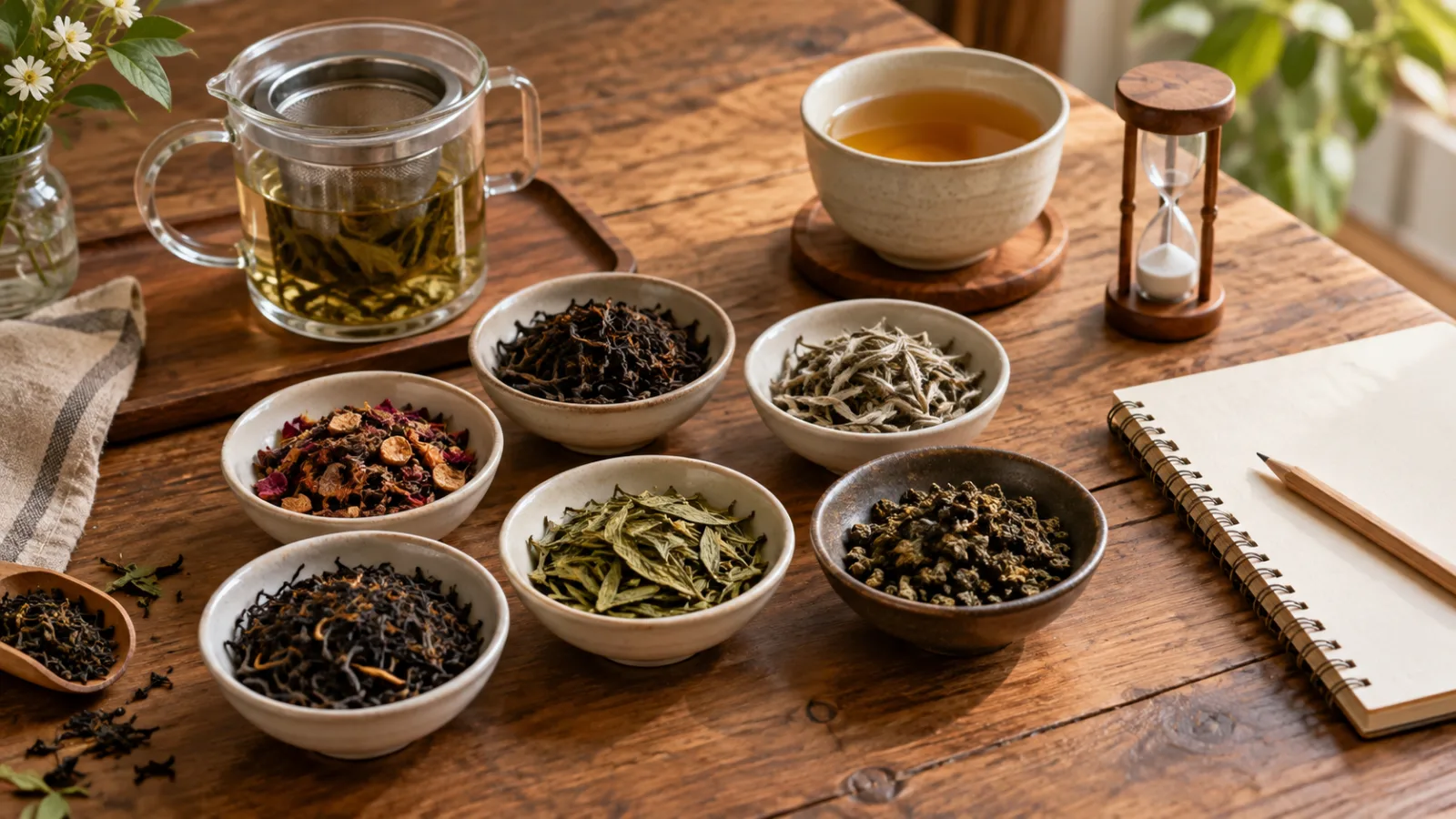
A sampler can be more useful than a large package when you are exploring a new category. Choose a range of styles, brew them with a consistent method, and record leaf amount, water temperature, steep time and tasting notes. This makes it easier to separate the tea itself from differences in preparation.
When comparing value, check the package weight and approximate number of servings rather than comparing package prices alone. Leaf size and recommended dosage can affect how many cups a package makes.
Check freshness and storage needs
Tea keeps best when protected from heat, moisture, light and strong odors. Use an airtight container appropriate for the product and avoid storing it beside spices or coffee if odor transfer is a concern. Buy an amount you can reasonably use while the aroma remains enjoyable.
Matcha and some delicate teas may have more specific storage recommendations. Follow the instructions supplied with the product rather than applying one rule to every style.
Match the infuser to the leaf
Whole or rolled leaves need room to expand. A roomy basket infuser or suitable teapot can provide better circulation than a very small tea ball. Fine-cut teas need a mesh fine enough to keep particles out of the cup.
For teaware, compare capacity, materials, filter design, heat handling, cleaning steps and replacement parts. Confirm whether an electric kettle supports the temperatures you intend to use and whether a travel brewer seals securely.
Control water temperature and steep time
The seller’s instructions are a good starting point. Water that is too hot or a steep that is too long can make some teas taste harsh, while insufficient time or leaf quantity can produce a weak cup. Change one variable at a time when adjusting a brew.
- Measure a consistent amount of leaf.
- Use fresh water suitable for drinking.
- Set the suggested temperature.
- Time the steep.
- Taste before changing the recipe.
Some whole-leaf teas can be steeped more than once. If the product recommends multiple infusions, note how flavor changes and adjust the later steep times.
Separate taste claims from health claims
Choose tea primarily by ingredients, flavor, brewing experience and suitability for your routine. This guide does not provide medical advice. If caffeine, herbs or other ingredients may interact with a medical condition, pregnancy or medication, ask an appropriate healthcare professional before use.
Review shipping and return details
Food and beverage returns can have different restrictions from teaware returns. Check current policies for damaged packages, unopened products, gifts and international delivery. Confirm shipping costs, taxes and the final order total at checkout.
Browse Adagio Teas
Adagio Teas offers loose-leaf tea, tea bags, samplers, gifts and brewing accessories across multiple tea styles. Use the product page for current ingredients, package sizes, caffeine information, steeping guidance and availability.
Browse current Adagio Teas and teaware.
For the connected offer, visit the Adagio Teas store page on StackTheCoupons.
Frequently asked questions
How much loose-leaf tea should I use?
Follow the specific product instructions because leaf density and recommended serving size vary. A measuring spoon or small scale can help keep tests consistent.
Does herbal tea always mean caffeine-free?
Not necessarily. Review the ingredient list and caffeine information for the exact blend. Some products combine herbs with tea leaves or other caffeinated ingredients.
Do I need expensive teaware?
No. A suitable infuser, cup and a way to heat water can be enough. Upgrade only when a tool solves a real need such as temperature control, larger capacity or easier cleanup.
Does this guide promise a coupon or discount?
No. It makes no coupon-code, price, discount or expiry claim. Check the current official destination for product and checkout details.
Bottom line
A good loose-leaf tea choice starts with a clear flavor goal, a complete ingredient check and brewing equipment that fits the leaf. Begin with samples, keep notes, and compare current product information instead of buying only by package size or marketing language.